Find out about clinical trials for investigational CAR-T therapy in lupus, myositis, diffuse cutaneous systemic sclerosis, and vasculitis.
Participation in clinical trials is voluntary. You are free to withdraw from the trial at any time without any impact on your usual healthcare.
Researchers are testing other treatments, including those that target B cells, so we can understand potential options for people who do not respond to available treatments.
Our clinical trials are looking to find out.
Investigational CAR-T therapy is specific to each patient. It is designed to remove the B cells that drive autoimmune diseases. Our clinical trials are looking to see how the immune system responds to investigational CAR-T therapy and what effect it has on autoimmune diseases.
We are running four Phase 2 clinical trials for investigational CAR-T therapy called the AUTOGRAPH trials. These are designed to evaluate the safety and effectiveness of investigational CAR-T therapy in four autoimmune diseases:
We are running four Phase 2 clinical trials for investigational CAR-T therapy called the AUTOGRAPH trials. These are designed to evaluate the safety and effectiveness of investigational CAR-T therapy in four autoimmune diseases:
AUTOGRAPH CLINICAL TRIALS:
In some of these trials, we will be researching the safety and effectiveness of investigational CAR-T therapy compared with commonly used treatments. So it is possible that you will not receive the investigational therapy if you participate.
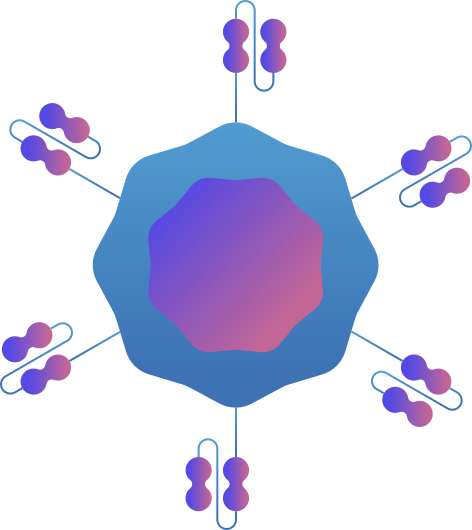

B cells produce antibodies that help our bodies attack germs that cause disease.

Some T cells directly remove these infected or harmful cells, others help guide the immune system to deal with them.


If you are eligible and choose to join an investigational CAR-T therapy trial, your trial team will clearly explain everything you need to know. Here’s a quick overview of the main steps involved in the trial, among others:
Collecting your T cells
During a process called “leukapheresis,” your blood is passed through a machine that separates and collects some of your T cells. The rest of your blood is then returned to your body.
Making the CAR-T cells
Your T cells are sent to a lab where they are genetically modified so they can target harmful B cells. The modified cells are called CAR-T cells.
Preparing for your investigational CAR-T therapy
Next, your body needs to get ready for the investigational CAR-T cells. In a process called “lymphodepletion,” you’ll be given an infusion of medicine designed to reduce the number of white blood cells in your body so there is space for the new investigational CAR-T cells.
Receiving your investigational CAR-T therapy
We’ll start by giving you some premedications to help reduce the risk of any side effects. You’ll then be given the investigational CAR-T cells through a one-time infusion.
Monitoring after your investigational CAR-T therapy
You will need to stay in the hospital for at least 2 weeks so we can closely monitor your health and make sure you’re doing well. For the following 2 weeks, you’ll need to stay less than 2 hours’ travel away from the hospital or trial clinic.
Long-term follow-up
When you’ve finished the trial, you’ll be asked if you want to join a long-term follow-up trial. If you join, we‘ll monitor your health to see the long-term effects of investigational CAR-T therapy.
What’s more, people who participate in clinical trials have the opportunity to help shape the future of care and grow our understanding of potential new treatments.
Like with all medicines, treatments, and therapies, there may be some side effects from the investigational CAR-T therapy. The trial team will closely monitor you for any signs of side effects. This monitoring is important as it allows us to identify and treat side effects early. Some of the main side effects are listed below, but as this is an investigational product, we don’t know everything about it yet so there may be others.
Possible side effects
Other side effects may also occur. You will be provided with a detailed list of possible side effects if you choose to find out more about these clinical trials.
Safety in the AUTOGRAPH trials
These clinical trials are being carried out to find out if investigational CAR-T therapy is safe and effective, and you will be monitored throughout the duration of the trial. Your condition could improve, stay the same, or get worse after receiving it.
To find out more about the AUTOGRAPH CAR-T therapy clinical trials and whether you might be eligible, choose the condition that applies to you from the links below.
A member of the trial team will be able to explain the trial in simple terms and look at your full medical history to help you find out if the trial is right for you. By requesting more information, you won’t be committing to join a trial.
Caring for a person with lupus is a vital role, and important to the success of a person’s treatment.
As part of the clinical trial, the person receiving the investigational CAR-T therapy will need to remain in hospital for 2 weeks after the infusion. They will then need to stay within 2 hours’ travel from the hospital for a further 2 weeks. It’s important that you’re aware of this as they may need your support during this time.
These are the key ways that caregivers can help:
Help your loved one understand what will happen during the clinical trial and raise any questions with the trial team.
Watch for any changes in how they feel and share these with the healthcare team.
Being present, listening, and helping them manage stress can make the process easier.
You may need to help with getting to appointments and keeping track of schedules.
Remember, support is always available if you need it. Contact the trial team to discuss any help you may need.
Clinical trials (or clinical studies) are more than just research. They are an essential part of developing new medicines and thousands of people around the world take part in them every year. Everyone involved in a clinical trial is helping shape the future of care.
Clinical trials are a type of medical research that volunteers take part in to help us find out important information about a medicine, device, or procedure, such as:
Clinical trials can offer patients access to investigational therapies with care and monitoring for the duration of the clinical trial.
More information about clinical trials is available in this booklet [link].
Investigational CAR‑T therapy is a personalized therapy made from each patient’s own immune cells. It modifies a person’s immune system to target harmful B cells that contribute to autoimmune diseases.
These clinical trials are looking at how effective investigational CAR‑T therapy is at helping people with autoimmune diseases who have been relying on the long-term use of other medications. Investigational CAR-T therapy is being tested and is not yet FDA-approved, so there is no guarantee there will be a personal benefit.
The AUTOGRAPH trials are Phase 2 trials to learn about Novartis’s investigational CAR-T therapy.
We are investigating its safety and effectiveness to see if it can help improve the lives of people with severe or refractory autoimmune diseases. Throughout the trial your autoimmune disease will be monitored to see if it has improved after treatment. Your overall health will also be monitored for any signs of side effects.
There are four separate trials, each looking at Novartis’s investigational CAR-T therapy in autoimmune diseases which are known to involve B cells. These are lupus (SLE / LN), myositis (IIM), diffuse cutaneous systemic sclerosis (dcSSc), and vasculitis (AAV).
Overall, the Novartis investigational CAR-T trials (known as the AUTOGRAPH clinical trials) will last for up to 6 years, depending on which trial you enroll in. The trials have several stages. If you are receiving investigational CAR-T therapy the stages will be:
Long-term follow-up trial: Once you have completed the trial, you may be asked to join a long-term follow-up trial.
We are looking for people to take part in clinical trials for Novartis’s investigational CAR-T cell therapy. To be included, we need people who, among other criteria:
For more information about the trial and other eligibility criteria, see the links below. If you aren’t sure if this applies to you, please contact your doctor or the trial team for more information. The team will look at your full medical history to help you find out if the trial is right for you. By requesting more information, you won’t be committing to join a trial.
Clinical sites may be able to support you financially and with travel so that we can ensure you have the easiest experience possible. They may be able to support with travel coordination, compensation for trial visits, and visit-associated expenses.
Reimbursement policies vary by site and are subject to ethics committee approval. Speak to the trial team for more detailed information on support that may be available to you.
For more information about Novartis clinical trials for patients and caregivers, please visit our Novartis website.

To control data you have already submitted, make a data request here.
Data you submit is handled according to our Privacy Policy and web site user agreements.
We do not sell data to third parties. Data you submit is handled according to our Privacy Policy and web site use agreements.
To control data you have already submitted, or to log a do not sell data request, make a data request here.